2026–2024
2026 · IEEE/ACM International Conference on Automated Software Engineering (ASE) · Industry Showcase
Kozuchi Agent: A Language-Agnostic Open-Weight Agent for Software Repair
Mehdi Bahrami and colleagues · All 27 authors
Mehdi Bahrami, Kosaku Kimura, Satoshi Munakata, Satoshi Nakashima, Yu Ishikawa, Kosuke Maeda, Nao Soma, Kenichi Kobayashi, Keisuke Miyazaki, Keizo Kato, Shigeki Fukuta, Tatsuo Kumano, Nobutaka Imamura, Kevin Musgrave, Shahbaz Abdul Khader, Kwun Ho Ngan, Joe Townsend, Fayas Asharindavida, Matthieu Parizy, Akira Sakai, Yuma Ichikawa, Yang Zhao, Michiaki Takizawa, Taku Fukui, Hiroki Ohtsuji, Wei-Peng Chen, and Hiromichi Kobashi
Kozuchi uses an eight-phase workflow to turn a bug report into a tested patch. With a locally hosted Qwen3.5-27B model and test-based selection across eight runs, it resolved 374 of 500 SWE-bench Verified issues. The same workflow resolved 41 of 128 Multi-SWE-bench Java issues.
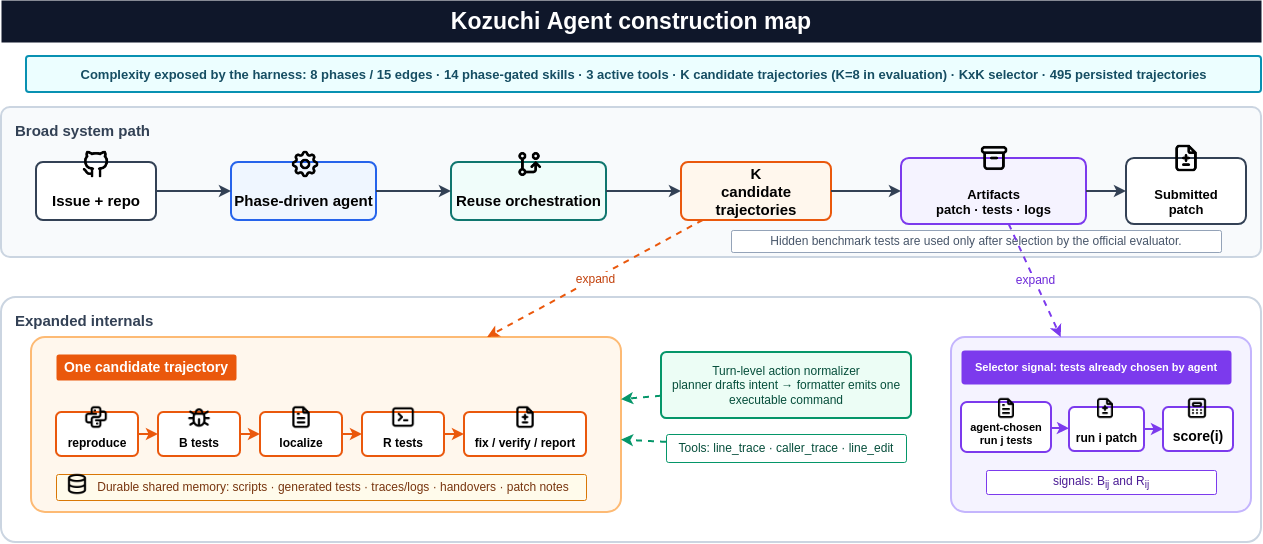
The authors’ repair architecture, from issue intake through cross-run patch selection. Full-size figure.
ACM paper · Open PDF · Project site · Agent code
More materials (8)
Reproducibility artifact · Evaluation data · Notebook · Poster (PDF) · Slides (PPTX) · ASE program · Presentation report · Google Scholar
2025 · ACM International Conference on Information and Knowledge Management (CIKM) · Applied Research
AutoDW-TS: Automated Data Wrangling for Time-Series Data
Lei Liu, So Hasegawa, Shailaja Keyur Sampat, Mehdi Bahrami, Wei-Peng Chen, Kodai Toyota, Takashi Kato, Takumi Akazaki, Akira Ura, and Tatsuya Asai
AutoDW-TS uses language models to prepare time-series data for forecasting. It merges tables, defines prediction tasks, cleans and imputes observations, and enriches the resulting data. The authors evaluated it on 38 time-series benchmarks and report improved forecasting performance.
Method overview
- Merge input tables
- Define the prediction task
- Clean and impute observations
- Enrich time-series data
2024 · ICML 2024 · SPIGM workshop
Regression-Stratified Sampling for Optimized Algorithm Selection in Time-Constrained Tabular AutoML
Mehdi Bahrami, So Hasegawa, Lei Liu, and Wei-Peng Chen
To choose a regression algorithm under a time limit, the method samples rows that preserve the distribution of the target values. It ranks candidate algorithms using a probability-density score. The authors evaluated the approach on 31 public datasets with six AutoML tools.
Paper (PDF) · Project and evaluation notebooks · Repository · Poster · Slides
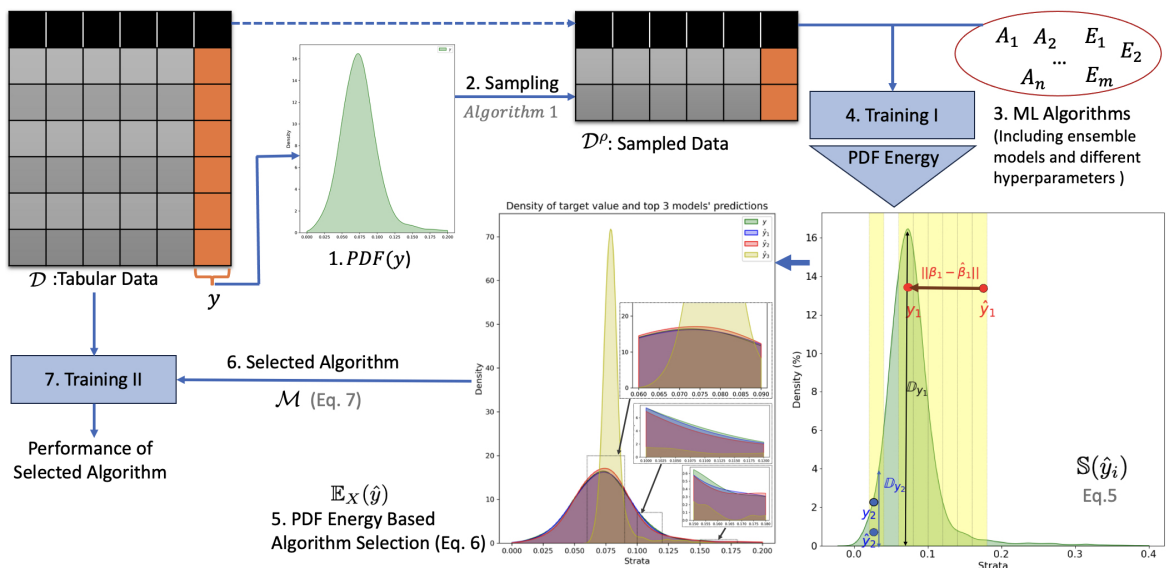
Target-aware sampling and algorithm selection. Full-size figure.
2024 · IEEE International Joint Conference on Neural Networks (IJCNN)
LLM Diagnostic Toolkit: Evaluating LLMs for Ethical Issues
Mehdi Bahrami, Ryosuke Sonoda, and Ramya Srinivasan
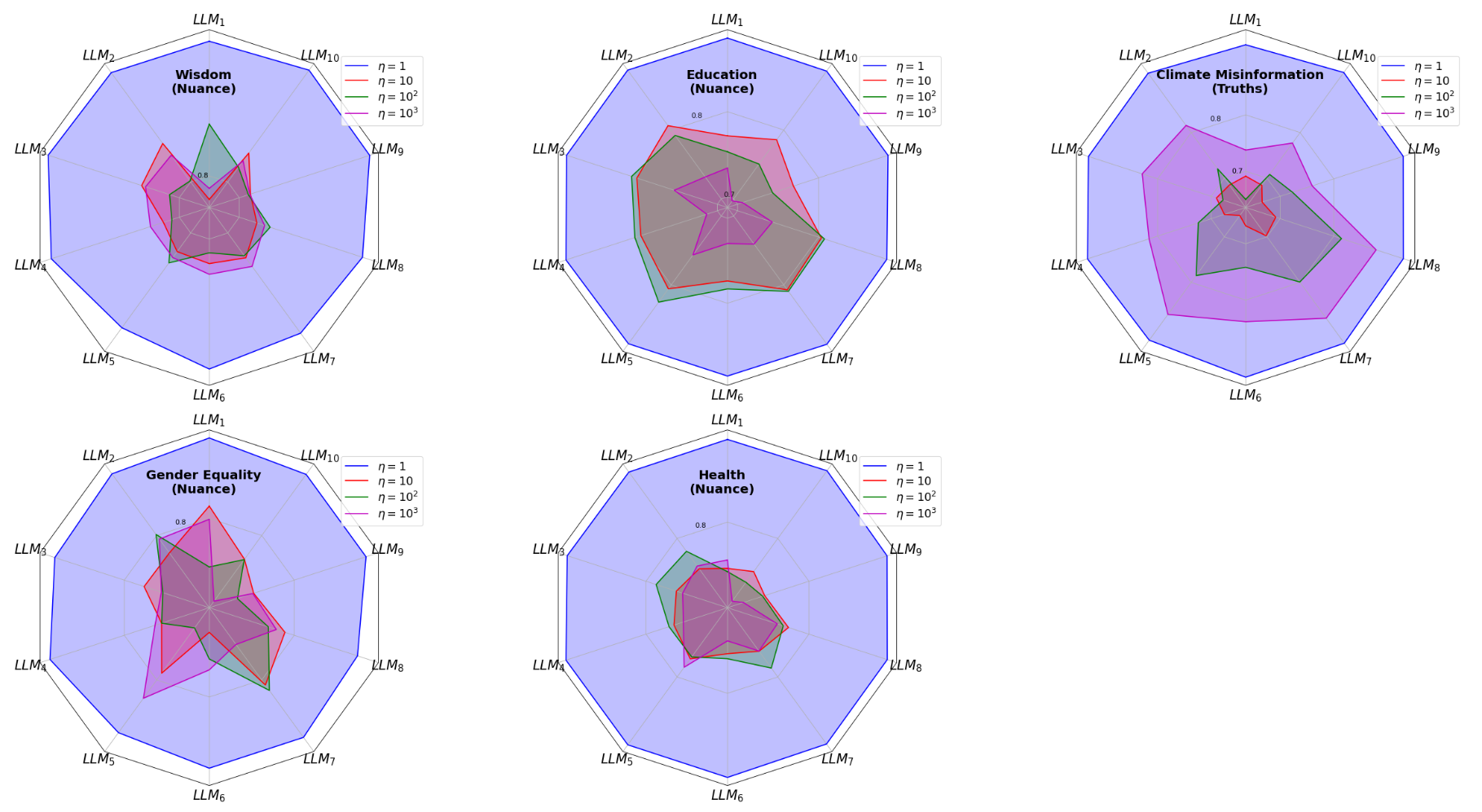
The toolkit compares how language models respond to statements about topics such as gender equality, health, and climate misinformation. Its fair active cleaning method ranks synthetic examples so a reviewer can examine a selected subset.
IEEE paper · Google Scholar · Related invited talk slides · Fujitsu technology overview · Model comparison charts · Source slide (p. 23)
Method overview
- Prepare topical test statements
- Score model predictions
- Prioritize examples for review
2023–2021
2023 · ICLR 2023 · Workshop on Trustworthy and Reliable Large-Scale Machine Learning Models
Examining LLM's Awareness of the United Nations Sustainable Development Goals (SDGs)
Mehdi Bahrami and Ramya Srinivasan
The authors compared human-written statements with statements generated by ChatGPT on six UN Sustainable Development Goal topics. Eight language models were tested on how they scored true and false statements, revealing where models struggled with more nuanced claims.
Paper (PDF) · OpenReview · Evaluation repository · Statement dataset · Poster
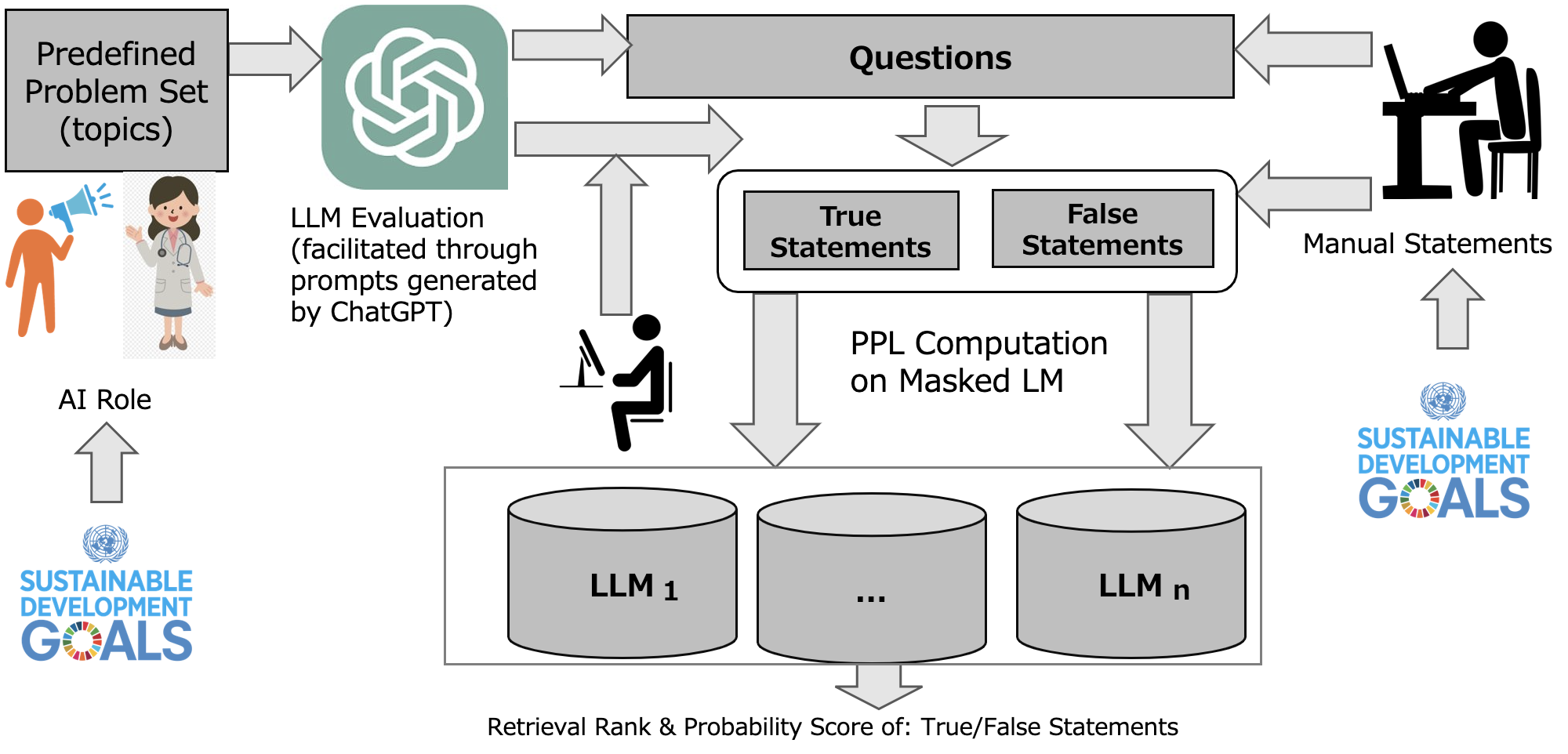
Creating and testing statements about the UN Sustainable Development Goals. Full-size figure.
2022 · International Conference on Automated Machine Learning (AutoML)
BERT-Sort: A Zero-shot MLM Semantic Encoder on Ordinal Features for AutoML
Mehdi Bahrami, Wei-Peng Chen, Lei Liu, and Mukul Prasad
Tabular datasets often encode ordered categories as words, such as month names or quality ratings. BERT-Sort scores candidate orders with a masked language model and assigns numeric codes in the most likely order. The authors tested it on 42 features from ten datasets.
PMLR paper · Paper (PDF) · OpenReview · Code and benchmarks
More materials (6)
Poster · Two-minute talk · Full talk · MIT Technology Review · Poster image · Figure in paper (p. 3)
Method overview
- Collect category values
- Score candidate orders
- Encode the inferred order
2022 · IEEE/ACM Automated Software Engineering (ASE) · Industry Showcase
Automatic Generation of Visualizations for Machine Learning Pipelines
Lei Liu, Wei-Peng Chen, Mehdi Bahrami, and Mukul Prasad
The system learns when to add a visualization to a machine learning pipeline by studying notebooks written by practitioners. It extracts features from both the code and its input table, then mines association rules that recommend charts for a new pipeline.
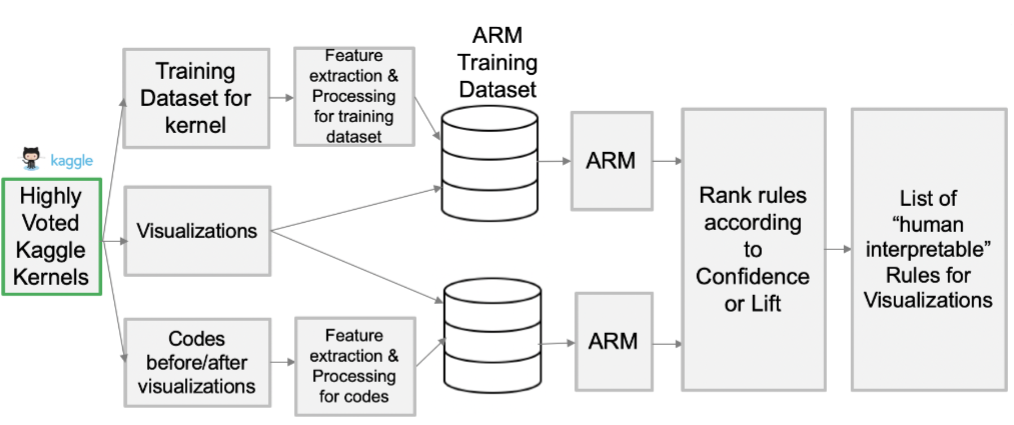
Learning visualization rules from notebook code and tabular data. Full-size figure.
2022 · IEEE International Conference on Web Services (ICWS)
An Intelligent Data-Centric Web Crawler Service for API Corpus Construction at Scale
Mehdi Assefi, Mehdi Bahrami, Sarthak Arora, Thiab R. Taha, Hamid R. Arabnia, Khaled M. Rasheed, and Wei-Peng Chen
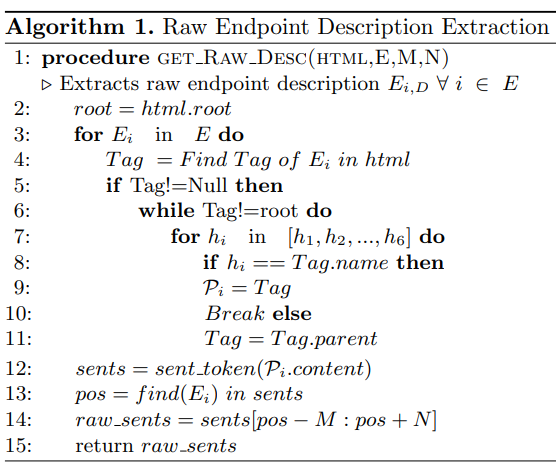
API documentation is dispersed across provider websites and mixed with unrelated pages. The crawler uses labeled examples to train a text classifier, then filters newly crawled pages to build a corpus of REST API documentation for downstream software engineering research.
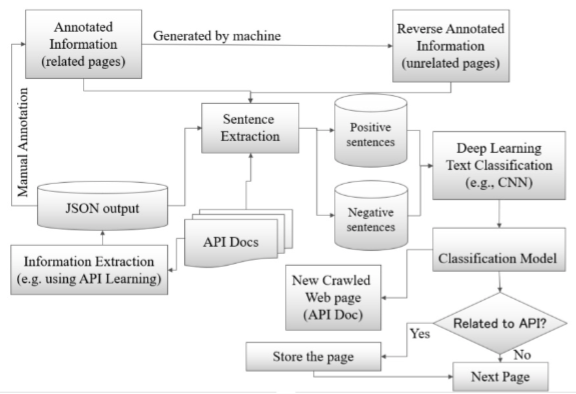
A classifier separates API documentation from other crawled pages. Full-size figure.
2021 · ACL-IJCNLP · Long Papers
A Systematic Investigation of KB-Text Embedding Alignment at Scale
Vardaan Pahuja, Yu Gu, Wenhu Chen, Mehdi Bahrami, Lei Liu, Wei-Peng Chen, and Yu Su
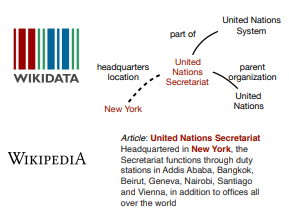
Wikidata records relationships that Wikipedia often describes in prose. This study compares ways to align their vector representations and tests joint reasoning through few-shot link prediction and analogy tasks. A COVID-19 case study examines whether text can supply information about emerging entities.
ACL Anthology · Paper (PDF) · Code and data · Slides
More materials (4)
Poster · Talk video · Wikidata and Wikipedia example · Figure in paper (PDF p. 4)
Method overview
- Embed Wikidata and Wikipedia
- Align the vector spaces
- Test links and analogies
2021 · arXiv preprint · Software Engineering
PyTorrent: A Python Library Corpus for Large-scale Language Models
Mehdi Bahrami, N. C. Shrikanth, Shade Ruangwan, Lei Liu, Yuji Mizobuchi, Masahiro Fukuyori, Wei-Peng Chen, Kazuki Munakata, and Tim Menzies
PyTorrent draws on 218,814 Python packages from PyPI and Anaconda. It pairs source code with natural language from the packages and releases the corpus, schema, and a pretrained model for research on code search and related tasks.
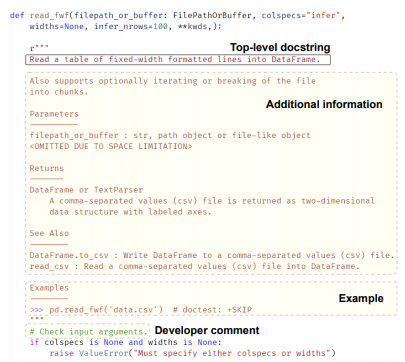
arXiv paper · Paper (PDF) · Repository and schema · Dataset · Pretrained model · Annotated code example
Method overview
- Collect Python packages
- Pair code with documentation
- Release corpus and model
2021 · arXiv preprint · Software Engineering
AugmentedCode: Examining the Effects of Natural Language Resources in Code Retrieval Models
Mehdi Bahrami, N. C. Shrikanth, Yuji Mizobuchi, Lei Liu, Masahiro Fukuyori, Wei-Peng Chen, and Kazuki Munakata
AugmentedCode enriches Python functions with text drawn from their documentation and development history. The authors compare ways to combine those signals when training a model to retrieve functions for a natural language query.
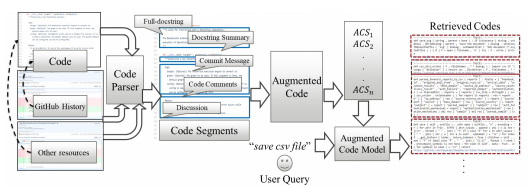
From code and documentation to ranked retrieval results. Full-size figure.
2020–2017
2020 · International Conference on Services Computing (SCC)
Automated Web Service Specification Generation Through a Transformation-Based Learning
Mehdi Bahrami and Wei-Peng Chen
The system reads REST API documentation and learns patterns for finding endpoints and assigning attributes to them. It converts the extracted information into machine-readable OpenAPI specifications, generating more than 2,300 in the reported study.
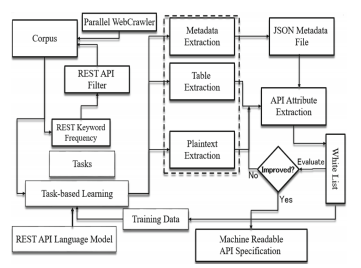
From heterogeneous documentation to OpenAPI specifications. Full-size figure.
2020 · IEEE/ACM Automated Software Engineering (ASE), Industry Showcase
Automatic Generation of IFTTT Mashup Infrastructures
Lei Liu, Mehdi Bahrami, and Wei-Peng Chen
Building an if-this-then-that automation normally requires configuring each service and wiring its inputs and outputs. This tool generates triggers, rules, and actions on AWS, then builds an XML workflow that Fujitsu RunMyProcess can deploy and execute.
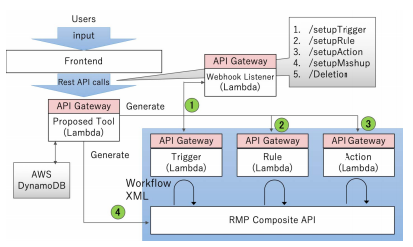
Generating and deploying a trigger–action workflow. Full-size figure.
2020 · International Conference on Web Services (ICWS)
Web API Search: Discover Web API and Its Endpoint with Natural Language Queries
Lei Liu, Mehdi Bahrami, Junhee Park, and Wei-Peng Chen
A developer describes a task in ordinary language, and the search system identifies both a relevant API and the endpoint that performs it. The authors build training examples from crowdsourced descriptions and use two stages of transfer learning to match requests to endpoints.
Method overview
- Collect descriptions
- Train a two-stage retrieval model
- Match a query to an endpoint
2019 · IEEE International Conference on Big Data
WATAPI: Composing Web API Specification from API Documentations through an Intelligent and Interactive Annotation Tool
Mehdi Bahrami and Wei-Peng Chen
WATAPI helps people turn differently formatted API documentation into a common specification. Its browser-based interface detects candidate OpenAPI objects, lets users assign or revise annotations, and exports the result as JSON.
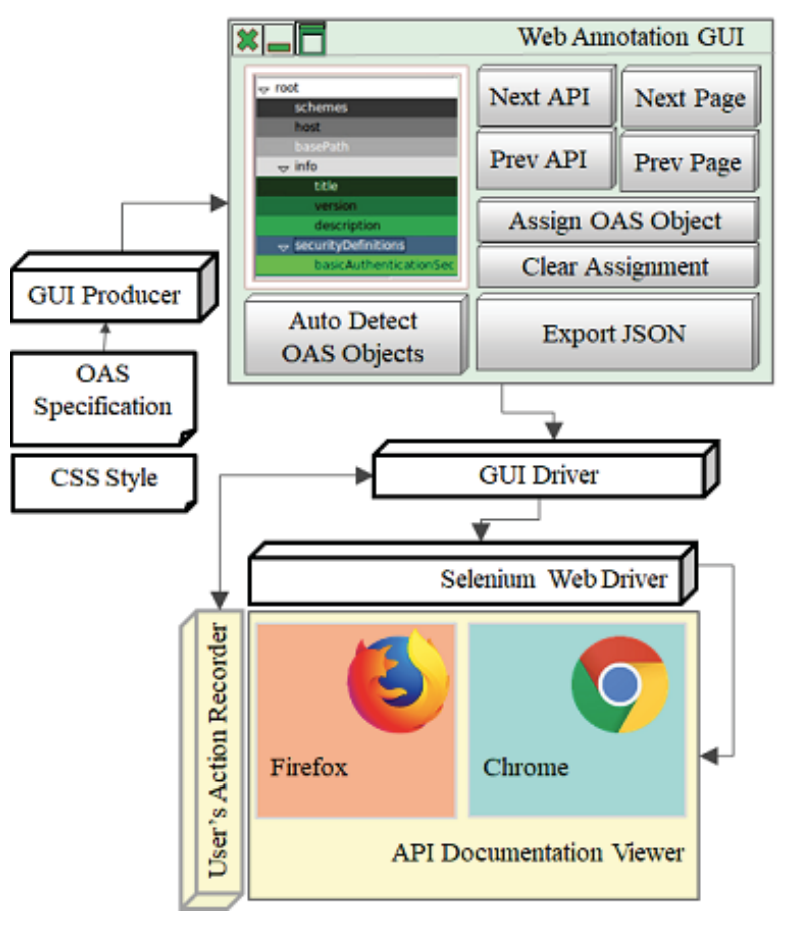
WATAPI’s browser-based annotation and export interface. Full-size figure.
2019 · International Conference on Advanced Information Networking and Applications (AINA)
Accelerating the Digital Transformation of Business and Society Through Composite Business Ecosystems
Shridhar Choudhary, Ian Thomas, Mehdi Bahrami, and Motoshi Sumioka
The paper proposes a way for distributed teams to build services together from existing business and technical resources. Its framework connects business and capability models to APIs, implementation models, and deployment across devices and cloud infrastructure.

Business models, API implementation, and deployment targets. Full-size figure.
2018 · The Web Conference Companion (WWW), Demos
API Learning: Applying Machine Learning to Manage the Rise of API Economy
Mehdi Bahrami, Junhee Park, Lei Liu, and Wei-Peng Chen
The platform extracts machine-readable information from API documentation so developers can search for functions and verify their availability. The demonstration also shows how the system recommends combinations of APIs for a specific task.

Documentation extraction, API validation, and mashup recommendation. Full-size figure.
2017 · IEEE International Conference on Smart Cloud (SmartCloud)
Learning Data Privacy and Terms of Service from Different Cloud Service Providers
Mehdi Bahrami, Mukesh Singhal, and Wei-Peng Chen
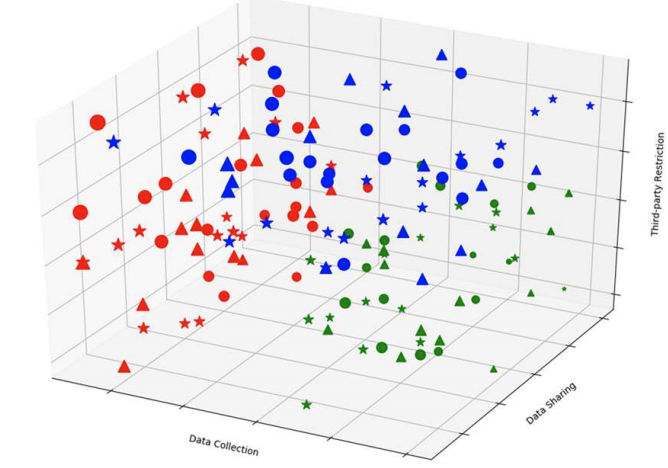
The authors turn cloud providers’ written terms of service into vectors describing practices such as data collection and sharing. They use clustering to compare providers and show where their privacy terms differ.
Method overview
- Collect providers’ terms
- Represent policies as vectors
- Cluster privacy practices
2017 · IEEE International Conference on Cloud Computing (CLOUD)
Compliance-Aware Provisioning of Containers on Cloud
Mehdi Bahrami, Abhishek Malvankar, Karan K. Budhraja, Chinmay Kundu, Mukesh Singhal, and Ashish Kundu
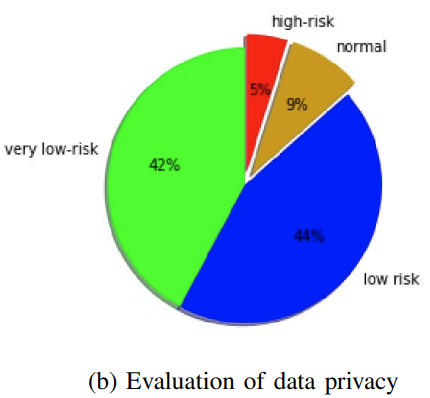
This model helps a cloud scheduler choose where to run containers that handle healthcare data. It scores candidate resources against privacy and security requirements derived from HIPAA and recommends placements with lower estimated risk.
IEEE paper · Author PDF · IBM Research record · Privacy-risk results figure · Figure in paper (p. 2)
Method overview
- Assess compliance requirements
- Score candidate resources
- Recommend container placement
2017 · IEEE International Conference on Cloud Computing (CLOUD)
Risk-Based Packet Routing for Privacy and Compliance-Preserving SDN
Karan K. Budhraja, Abhishek Malvankar, Mehdi Bahrami, Chinmay Kundu, Ashish Kundu, and Mukesh Singhal
A software-defined network controller uses packet-transfer history to estimate privacy and compliance risks when routing sensitive traffic. The prototype combines machine learning with ant-colony optimization to select routes and update rules on network switches.
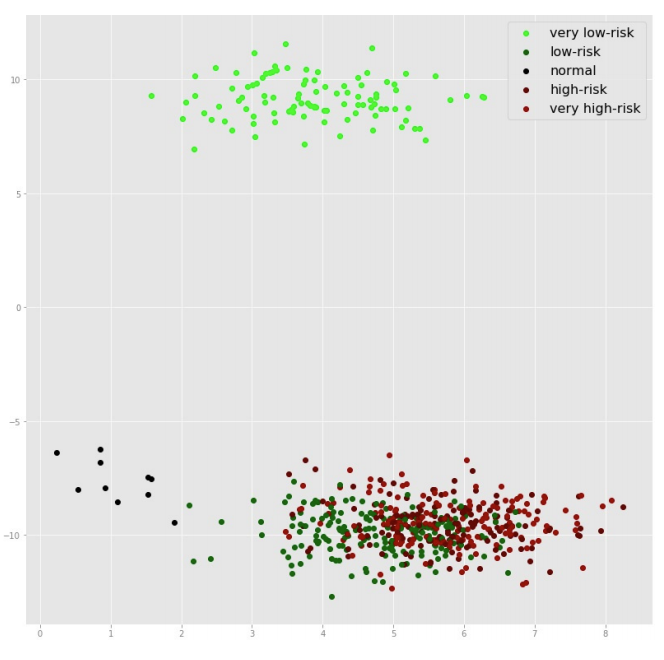
IEEE paper · Author PDF · IBM Research record · Routing-risk results figure
Method overview
- Collect transfer history
- Estimate routing risk
- Update switch rules
2016–2014
2016 · Ph.D. dissertation · University of California, Merced
A Dynamic Cloud with Data Privacy Preservation
Mehdi Bahrami
How can an application move across cloud providers while its users retain control of sensitive data? This dissertation develops a common template layer for cloud services and studies lightweight data scrambling for mobile clients and cloud databases.
Method overview
- Application requirements
- Dynamic template service
- Heterogeneous cloud services
2016 · DataCloud workshop at SC 2016
An Efficient Parallel Implementation of a Light-weight Data Privacy Method for Mobile Cloud Users
Mehdi Bahrami, Dong Li, Mukesh Singhal, and Ashish Kundu
Permuting the contents of a large file is costly on a mobile device. The authors split the file into chunks and use CUDA to shuffle data in parallel, measuring both runtime and the distribution of the resulting addresses.
Method overview
- Split input into chunks
- Apply permutations on GPU cores
- Reassemble scrambled data
2016 · IEEE International Conference on Computing, Networking and Communications (ICNC)
CloudPDB: A Light-weight Data Privacy Schema for Cloud-based Databases
Mehdi Bahrami and Mukesh Singhal
CloudPDB scrambles selected groups of records or fields before a database is outsourced. The authors evaluate the cost of this transformation with TPC-H queries and compare it with encryption-based alternatives.
Method overview
- Select database buckets
- Permute selected values
- Store the transformed database
2015 · IEEE International Conference on e-Health Networking, Applications and Services (HealthCom)
A Dynamic Cloud Computing Platform for eHealth Systems
Mehdi Bahrami and Mukesh Singhal
The platform gives electronic health record applications a common service interface across cloud providers. A prototype compares AES with a lightweight data privacy method when storing and accessing medical records.
Method overview
- Electronic health record application
- eHealth service template
- Cloud storage and data protection
2015 · IEEE International Conference on Information Reuse and Integration (IRI)
DCCSOA: A Dynamic Cloud Computing Service-Oriented Architecture
Mehdi Bahrami and Mukesh Singhal
DCCSOA puts a customizable template between an application and the services offered by a cloud provider. The same layer describes access to infrastructure, platforms, and software services across different cloud environments.
Method overview
- Client application
- Template-as-a-Service
- Provider-specific services
2015 · IEEE International Conference on Mobile Cloud Computing, Services, and Engineering (MobileCloud)
A Light-Weight Permutation Based Method for Data Privacy in Mobile Cloud Computing
Mehdi Bahrami and Mukesh Singhal
This study explores a client-side alternative for resource-constrained devices that outsource files to cloud storage. A JPEG case study measures the cost of scrambling image data with a pseudorandom permutation.
Method overview
- Mobile client data
- Apply a pseudorandom permutation
- Store in one or more clouds
2015 · International Conference on Intelligence in Next Generation Networks (ICIN)
A Cloud-based Web Crawler Architecture
Mehdi Bahrami, Mukesh Singhal, and Zixuan Zhuang
Distributed crawler agents share the job of collecting web pages. The prototype stores structured findings in Azure Table Storage and larger unstructured objects in Blob Storage, and evaluates how the system scales.
Method overview
- Distribute crawling tasks
- Run crawler agents
- Write to Azure Table and Blob storage
2015 · Book chapter · Information Granularity, Big Data, and Computational Intelligence
The Role of Cloud Computing Architecture in Big Data
Mehdi Bahrami and Mukesh Singhal
This chapter connects the demands of large datasets to cloud storage, computation, and analytics. It surveys how cloud service layers and open-source tools support business intelligence.
Method overview
- Cloud storage
- Distributed computation
- Business intelligence
Interview
2014 · Info-Tech Research Group · Choose the Right Tools for Big Data Development